
Identify an Ohio County Owner
An address alone is only a clue. The Ohio County PVA roll ties a situs address to a parcel ID and an owner-of-record name. That name is a start, not proof. The Clerk's deed index supplies the rest. Its newest instrument names the grantee, and no official source publishes a measured deed-to-roll update lag for Ohio County, so read both records together.
- Enter the full physical address in the Ohio County qPublic application. Keep road numbers, directionals, and suffixes.
- Copy the primary-owner name, parcel ID, situs, mailing line, and legal-description reference that the current card displays.
- Search that name as a recent grantee in the Clerk's eCCLIX index. Compare the land description and recording reference.
- If an LLC owns the land, check the Kentucky Secretary of State entity record. If an estate or trust appears, follow the related recorded instrument.
The result names the record owner. It may not be the person on the land. Keep that distinction clear when you contact an owner about a purchase, access request, shared line, or easement.
When an address search fails, keep the street number. Vary the road name, route number, suffix, and direction. Ohio County records may use a route-style situs such as US Highway 231 South. Once one correct card appears, the parcel ID and legal description become stronger cross-office keys than street spelling.
Ohio County Owner Evidence
Every public source answers a different piece of the ownership question. The PVA offers the fast current-roll lead. The Clerk holds the recorded conveyance. A GIS map can place the parcel but proves no title, and an entity filing describes a business rather than the land it holds.
| Source | Owner Info It Gives | Access |
|---|---|---|
| Ohio County PVA roll | Primary owner, mailing and situs links, parcel ID, and assessment fields as available | qPublic or PVA office |
| Ohio County Clerk index | Grantee and grantor, instrument reference, recording date, and legal-description clues | eCCLIX or Clerk request |
| Kentucky business search | Entity profile and filed agent or officer information, subject to filing currency | Free state search |
| County parcel map | Tax-parcel shape and map-to-card path | qPublic GIS/CAMA viewer |
Owners do not always live on the land they hold. A company can own the parcel. A fiduciary can act for an estate. For the present roll entry, turn to the current Ohio County owner record; for prior names, use the former-owner deed chain.
Read Ohio County Owner Fields
The local qPublic platform advertises several search routes. Owner name, address, parcel ID, and alternate ID each work. An official Kentucky Public Service Commission filing shows one Ohio County qPublic result. Its sample card carries a Primary Owner line. It also lists a US Highway 231 South location and parcel 141-37 & 38A. The exhibit is dated, though. Read it as a guide to local field format, not a current owner card.
- Owner of record
- The person or entity carried on the assessment roll for the parcel.
- Grantee
- The party that receives an interest in the recorded deed.
- Situs address
- The physical location used to identify the land.
- Mailing address
- The destination for owner or tax correspondence; it may differ from the situs.
See the qPublic platform search entry used to select Kentucky and Ohio County.
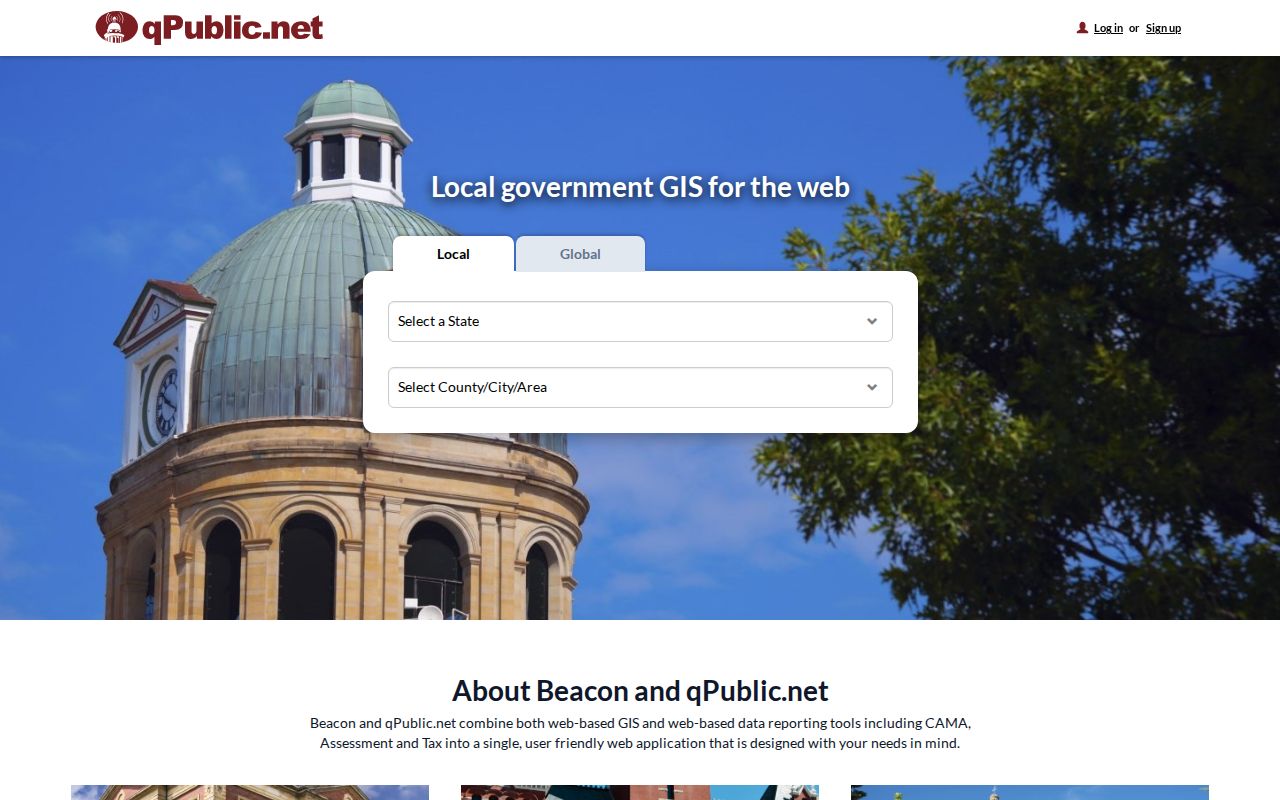
Platform options only open the door to the county dataset. The ownership answer still comes from a current Ohio County card and deed.
Trace Ohio County Owners to Deeds
After the PVA gives you a name, open the Ohio County Clerk's eCCLIX instructions. Search that owner as grantee. Spelling variants, initials, full entity names, and estate forms all belong in the attempt. Find the newest plausible instrument. Then compare it with the parcel reference and the legal description. Check any prior-document reference too.
Private-citizen eCCLIX use is free and restricted to Ohio County, with five searches per day. Commercial access takes a subscription. The earliest online index year is not published. A blank result proves nothing. When the online chain stops, ask the Clerk for the older book or image.
Your next step moves from the index to an official copy. For that, view the Ohio County Clerk records office.
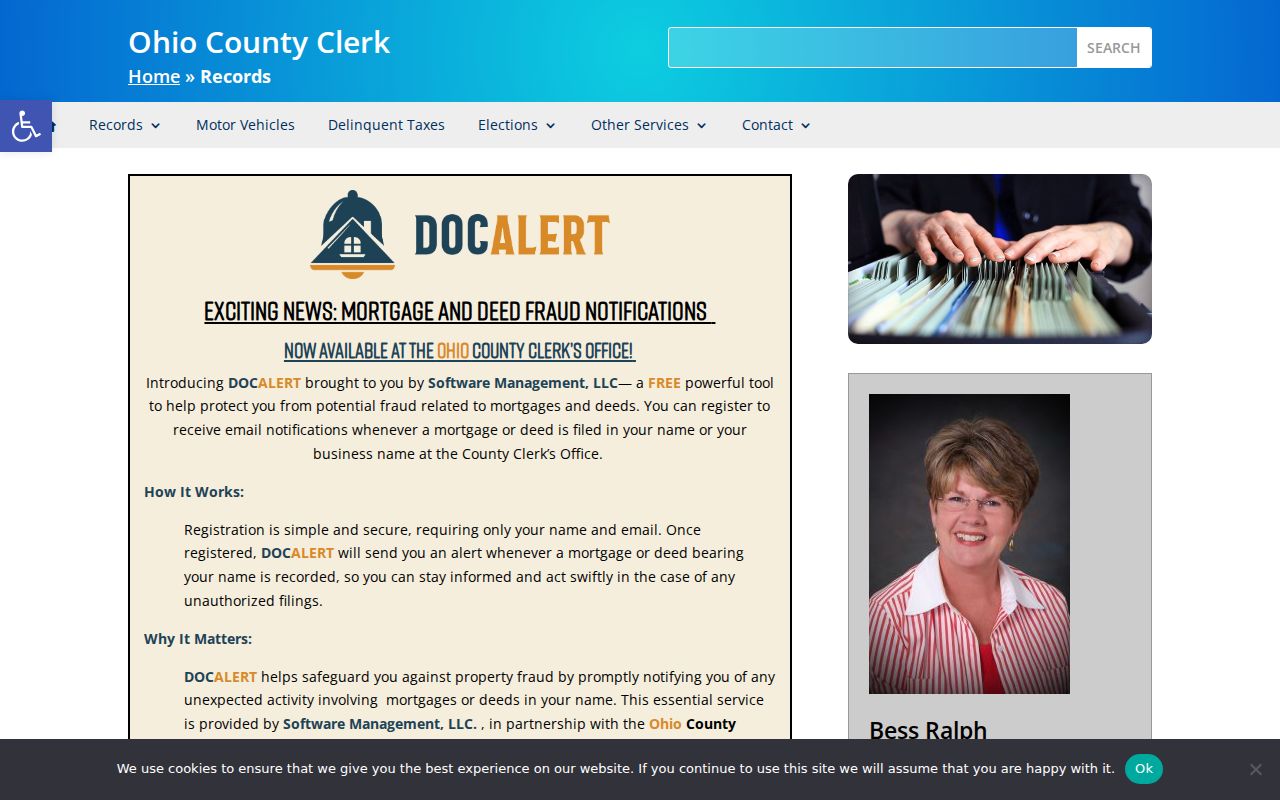
The Clerk page leads to the actual land instrument. That instrument carries more weight than a tax-roll name standing alone.
Ohio County Mailing Clues
A tax mailing line can separate owners with similar names. It is not the property location. The Ohio County Sheriff notes that the PVA maintains the tax-bill mailing address. A duplicate bill may go out by mail, fax, or email while the Sheriff collects it. But sending one elsewhere does not change future mailings.
Read three lines together: owner, situs, and mailing. If one looks wrong, ask the PVA about the roll entry. Then compare it with the most recent deed. Never infer occupancy from the mailing line. It may be an office, a post-office box, a fiduciary address, or another property.
Note: The tax mailing address is a contact clue, while the situs and legal description identify the Ohio County land.
Ohio County Entity Owners
The PVA sometimes names an LLC or corporation. Search that exact business name in the Kentucky Business Entity Search. The state record offers the entity profile and filed contacts. Annual reports may lag real-world changes. An officer listing never proves that an individual personally owns the parcel.
Trusts and estates take a different path. Search the Clerk's deed index for the full trust or trustee wording. Also try the estate, executor, administrator, or fiduciary wording. Probate or court records may explain authority, but the recorded deed remains the property evidence. Names can change form between documents, so search both sides of the transfer.
Recent Ohio County Transfers
Deeds record all year in Ohio County. The assessment date, though, is January 1. The PVA publishes no fixed lag between a recorded deed and its owner update. A recent sale is therefore the clearest case for checking both systems. The tax roll may still carry the prior owner of record. That can persist even after the Clerk has indexed the newer conveyance. Compare recording date, grantee, parcel reference, and legal description to pick the latest applicable instrument. A mortgage or lien does not replace the deed owner. Watch the legal description too. It may cover only part of a tract. If so, ask whether the PVA created a child parcel or combined parcels.
Request Ohio County Owner Records
When qPublic will not load, contact the PVA at 301 South Main Street in Hartford. Ask for the assessment card and parcel key. If eCCLIX lacks the deed, use the Clerk's open-records policy. It permits a signed request by hand delivery, mail, fax, or email. Name the owner, parcel, record type, and date range. Expect a written response within five working days. Weekends and holidays do not count. Noncommercial paper copies run $0.50 each unless another statutory fee controls. Fees and postage are prepaid. The main Clerk counter sits in Hartford. The Fordsville branch opens Tuesdays with a midday closure. These routes matter when an older image or index entry is not online.
Monitor Ohio County Owner Names
The Clerk's free Ohio County DOC ALERT takes a name and an email address, then sends notice when that personal or business name appears on a recorded mortgage or deed. That can tip an owner to a new filing. The alert does not block a filing. It does not name the true buyer, examine title, or prove who owns the property. Pick name variants that match the deed. An entity owner should use its exact filed business name. An individual may need a consistent middle initial. Before acting on any alert, pull the recorded instrument itself.
Ohio County Owner Lookup Limits
Any answer to who owns this property depends on the record searched. The PVA roll names the assessed owner. A deed index points to a recorded instrument. Neither proves occupancy or every claim to title. Kentucky Safe at Home can shield qualifying participants' physical addresses in covered records, though real-estate holdings remain a statutory public-record exception.
Lawful use. Use Ohio County owner records for lawful property research; stalking, harassment, intimidation, or harm is prohibited.
A public lookup is a sound lead. It is not a title opinion. For a purchase, estate, easement, or disputed-interest question, get the deed image and seek a qualified title review when the stakes call for it.