
Read Ohio County's Owner-of-Record Card
The PVA assessment roll is where a present-tense lookup begins. Its owner field ties a name to a parcel, but you still need to match by parcel number, physical address, and legal description. On the local card, the line reads Primary Owner.
| Primary Owner | The person or entity printed on the assessment card |
|---|---|
| Mailing Address | Where tax correspondence is sent |
| Location Address | The physical or situs address |
| Parcel Number | The exact cross-office key |
| Last Sale | A date, price, or reference only if displayed |
| Legal Description | The land description used to test the deed match |
An owner name is not an occupant name. The card is not wrong because the mailing address sits elsewhere. Farms, entities, estates, and remote owners often receive tax notices at another address.
A Citable Ohio County Owner Record
One official Kentucky Public Service Commission filing reproduces a local qPublic screen. It shows parcel 141-37 & 38A and location 6109 US HWY 231 S. It also shows Primary Owner Robert B Blacklock. Those three fields, plus the compound parcel format, appear plainly on that result.
It does not follow that the named owner is still current. Nor does it follow that every card matches field for field. Carry the parcel ID into any other record with its symbols and spaces intact.
For wider options, the qPublic platform search offers name, address, and parcel ID modes. It also covers alternate ID and jurisdiction.
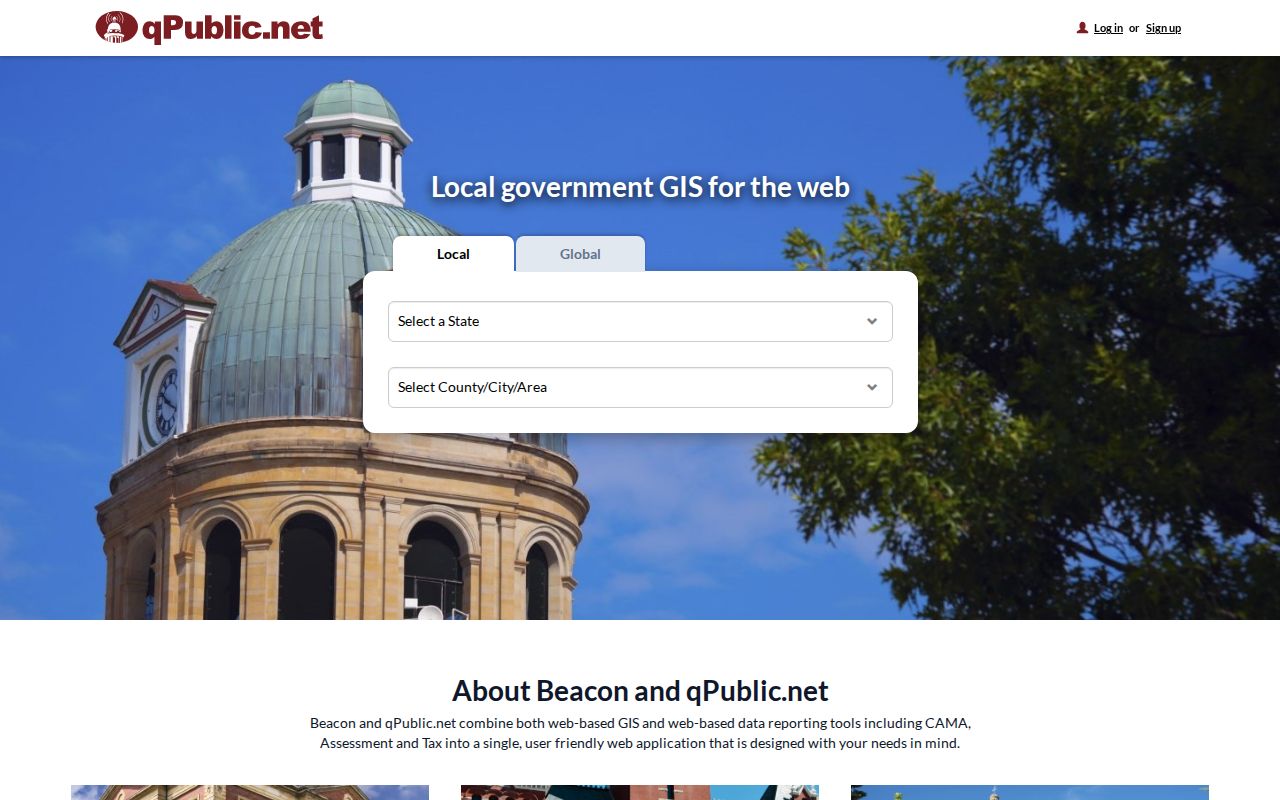
Treat those modes as navigation aids only. The actual owner line comes from the selected Ohio County result.
Check the Date of Ohio County's Owner Roll
January 1 is the assessment date, per the Sheriff. Kentucky DOR revalues real property every year. Yet Ohio County publishes no measured lag between a closing and the roll update. A deed recorded after that snapshot can reach the Clerk's index early. The tax roll may not move until later.
So write down the date you read the PVA card. Then look for any later deed on the same legal description. A newer deed may be the fresher ownership evidence. Meanwhile the roll still prints the prior owner.
Recent-sale check. The assessment roll can trail a transfer; use the newest matching deed to verify the present grantee.
Confirm the Current Ohio County Property Owner
Confirmation means checking two records. Keep the focus on the latest owner rather than every past conveyance.
- Search the Ohio County PVA qPublic application by situs address.
- Copy the owner, parcel ID, location, mailing line, and any deed reference.
- Search the Ohio County Clerk eCCLIX index for the latest deed to or from that party.
- Compare date, grantee, parcel reference, and legal description.
- Owner of record
- The person or entity named by the current public source.
- Assessment roll
- The PVA record for parcel assessment and tax administration.
- Recording lag
- The interval before another record reflects a deed; no local norm is published.
- Situs address
- The physical parcel, distinct from the mailing line.
Private eCCLIX use is free for personal Ohio County searches, capped at five a day. The earliest online year goes unpublished. That gap rarely blocks a latest-deed check.
Separate Ohio County Owner, Situs, and Mail
Three lines on one card answer three different questions. The owner line names the roll party. The situs line points to the land itself. The mailing line tells the PVA and Sheriff where notices go. Swapping them freely breeds false matches.
| Line | Question | Frequent error |
|---|---|---|
| Primary Owner | Whom does the roll name now? | Assuming the party occupies the site |
| Location Address | Where is the parcel? | Using a ZIP label as a city boundary |
| Mailing Address | Where does tax mail go? | Treating it as the physical parcel |
During collection, a duplicate tax bill can go to another address, but that does not fix future mail permanently. Address corrections belong with the PVA.
Note: Match a common name with parcel ID, situs, and legal description before trusting any Ohio County owner.
Match Ohio County Owner Records by Parcel
A current-owner check can fail even when both records are right. Names get indexed with initials, a married surname, stray punctuation, or an entity suffix. Street labels drift between a named road and a route number. The parcel identifier and legal description cut through that noise. They anchor the land, not a spelling.
Start with the exact parcel number on the Ohio County card. Keep every space, hyphen, ampersand, and compound form just as printed. The local sample, 141-37 & 38A, shows why that discipline pays off. Then compare the deed's acreage, lot and block, boundary calls, or prior-recording reference. A name match on a different tract proves nothing.
Parcel changes add one more step. A split can spawn child parcels. A combination can fold several older descriptions into one current card. Ask the PVA whether the identifier changed. Then ask the Clerk for the conveyance or plat behind the shift. That keeps the ownership question current while honoring the record structure beneath the card.
For an official offline answer, date the request. Ask the PVA for the card tied to that parcel ID. If the owner's name differs from the latest deed, give the Clerk's recording date and instrument locator. Ask about the update at the same time. Ohio County publishes no standard interval, so two dated records beat any assumed lag. Keep both whenever the owner of record must be documented for a purchase, estate, easement, or boundary matter.
Read an Ohio County Entity or Estate Owner
The owner of record is sometimes a company or an estate rather than a person. Match the PVA spelling first, then vary punctuation and abbreviations in eCCLIX. When the card names an LLC or corporation, use the Kentucky business entity search. It confirms the legal name and registered office.
A registered agent is a contact point only. That agent does not own the land by virtue of the role. Trust terms may stay private. Estates and decedents can linger on a parcel card. That can happen even after a newer probate instrument or deed. The most recent matching land instrument settles the question.
Request an Ohio County Owner Record Offline
If qPublic blocks access, call the PVA at (270) 298-4433, fax (270) 298-4435, mail P.O. Box 187, Hartford, KY 42347, or visit 301 South Main Street from 8:00 a.m. to 4:00 p.m. Central, Monday through Friday. Ask for the current parcel card by situs and parcel ID.
For the deed, the Clerk is at 301 South Main Street, Suite 201. Recording staff use (270) 298-4423. The Clerk's request policy accepts signed requests by hand, mail, fax, or email and provides a written response within five working days. Noncommercial paper copies cost $0.50 unless a statutory fee controls; fees and postage are prepaid.
Monitor Ohio County Owner-Name Recordings
The Clerk links Ohio County DOC ALERT for anyone tracking owner-name recordings. Enter a personal or business name plus an email address, and the service sends notice whenever a deed or mortgage is recorded under that name in Ohio County property records. It earns its keep once the current owner of record has been verified. An alert alone proves nothing, though. It cannot judge whether an instrument is valid or touches the right parcel, so open each notice and compare the legal description against the plat. Note: Monitoring works best when each known entity spelling and name variant is registered and every alert is reviewed promptly.
Use Ohio County Current Owner Data Lawfully
A public mailing line can back a deed question or a boundary notice. It can also serve an estate inquiry or a purchase offer. It says nothing about who is physically present. Kentucky Safe at Home may substitute a protected mailing address in covered records. Real-estate holdings remain a statutory public-record exception.
Use official details for legitimate property research. Never use a current owner lookup to stalk, harass, threaten, or target anyone. For earlier transfers, the historical-owner page is the better route.
Lawful use only. Public owner records do not authorize harassment, stalking, threats, or unwanted contact.